

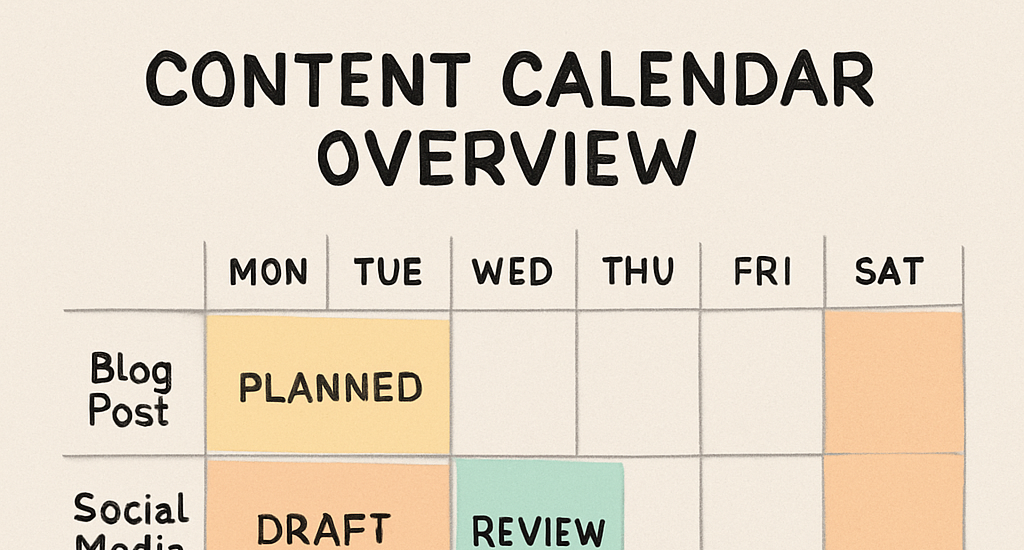
A Simple Content Calendar Template + How to Use It
Creating content can be overwhelming without a plan. That’s where a content calendar comes in handy.
A content calendar is a tool to organize and schedule your content. It helps maintain consistency across platforms.
With a simple content calendar template, you can streamline your content strategy. This includes social media and editorial planning. Think of it as a flexible content strategy template that keeps ideas, channels, and owners aligned.
Using a content calendar ensures your content aligns with business goals. It also aids in resource allocation and time management.
A well-structured calendar can improve team collaboration. It provides a clear overview of upcoming content.
It also helps track content performance and make data-driven decisions. This is crucial for optimizing future content.
In this guide, we’ll explore how to create and use a content calendar. You’ll learn to enhance your content strategy effectively. If you’re looking for a simple content calendar template + how to use it, you’ll find both outlined step by step.
Let’s dive into the world of content calendars and transform your content planning process.
What Is a Content Calendar and Why You Need One
A content calendar is a strategic tool. It helps plan, organize, and schedule content. This includes blog posts, social media updates, and more.
Content calendars are essential for maintaining consistency. They ensure timely content publication across all platforms. Consistency is key for building and engaging an audience.
Using a content calendar aligns your content with business objectives. It also aids in tracking content performance. This makes it easier to measure success and make necessary adjustments. Depending on your needs, it can double as an editorial calendar template or a social media calendar to standardize planning across channels.
Key Features of a Content Calendar:
- Details like content type and publication date.
- Assigned team members responsible for content.
- Platforms or channels for distribution.
A content calendar helps identify content gaps and opportunities. This allows for better planning and repurposing existing content. It supports long-term strategy development.

Incorporating a content calendar in your workflow can transform your content marketing efforts. It provides clarity and focus, keeping your strategy on track.
Key Benefits of Using a Content Calendar
A content calendar streamlines your content strategy. It ensures a cohesive approach to content creation and distribution. By using a calendar, you can stay ahead of deadlines.
One major benefit is improved collaboration. Team members can see what content is in the pipeline. This clarity reduces confusion and enhances productivity.
A content calendar also boosts consistency. Regular posting builds trust and keeps the audience engaged. Maintaining a reliable schedule is easier with a well-planned calendar.
Benefits Summary:
- Aligns content with strategic goals
- Enhances team collaboration
- Improves content consistency
- Aids in identifying content gaps
Furthermore, content calendars offer insights into content performance. They enable tracking metrics, allowing for informed decisions. This data-driven approach optimizes future content efforts.

In essence, a content calendar is a roadmap. It guides your content journey and strengthens your brand presence.
Types of Content Calendars: Editorial, Social Media, and More
Content calendars come in various types. Each serves a unique purpose in content planning. Understanding these can enhance your strategy.
An editorial calendar is for written content. It includes blog posts, articles, and newsletters. Editors use it to plan publication schedules. Using an editorial calendar template helps you replicate your workflow month after month and maintain standards.
A social media calendar focuses on platforms like Instagram and Twitter. It schedules posts and campaigns. Managing social media without it can be chaotic.
Different teams may need tailored calendars. For comprehensive planning, consider combining different types. This ensures no platform is overlooked.
Types of Content Calendars:
- Editorial calendar
- Social media calendar
- Campaign-specific calendar
Using multiple calendars can harmonize efforts across channels. This approach ensures message alignment. Together, these can roll up into a single content strategy template for end-to-end planning.
Finally, explore specialized tools for each calendar type. These can offer additional features and flexibility.
 by 2H Media (https://unsplash.com/@2hmedia)
Essential Elements of a Simple Content Calendar Template
A content calendar template should be straightforward. Simplicity ensures ease of use. Focus on essential elements for effectiveness.
Include key information such as content type. This defines whether it’s a blog post or social media update. Clarity at this stage is vital.
Add publication dates. Scheduling posts maintains consistency. Consistency helps build a loyal audience.
Specify platforms for each piece of content. Knowing where content will go streamlines creation and distribution. Match content type to the correct platform for best results.
Assign team members to tasks. This clarifies who handles each aspect. Everyone understands their role, which boosts collaboration.
Essential Elements to Include:
- Content type
- Publication date
- Platform
- Assigned team member
Customizing your template is important. Tailor it to your needs and objectives for the most impact.
 by Mille Sanders (https://unsplash.com/@millesanders)
Step-by-Step: How to Create Your Content Calendar Template
Creating a content calendar template can be transformative. Follow these steps for a seamless process.
Start by defining your content goals. Understanding your objectives lays the foundation. It dictates the type of content you need.
Next, audit your existing content. Evaluate what you’ve already produced. Identify any gaps or areas for improvement.
Choose the right tools for your template. Options include Google Sheets, Excel, or specialized software. Select based on your team’s workflow.
Customize your calendar structure. Make it fit your unique needs. This ensures it serves your strategy effectively.
Keep it simple but functional. Focus on usability for all team members. A complex design can hinder adoption.
Review and refine regularly. Update the calendar as your strategy evolves. This keeps it aligned with your goals.
Involve your team in the creation process. Incorporating feedback improves buy-in and utility. Team collaboration increases calendar effectiveness.
 by Zhuo Cheng you (https://unsplash.com/@benjamin_1017)
1. Define Your Content Goals and Objectives
Start by clarifying your content goals. Goals shape your content strategy. They influence content types and platforms.
These may include increasing brand awareness or boosting engagement. Each goal requires different approaches.
Create a list of your objectives. Match each goal with a relevant strategy. This ensures every content piece contributes purposefully.
2. Audit Existing Content and Identify Gaps
Begin with a thorough content audit. Review what content you already have. Assess its performance and relevance.
Identify gaps in your current content library. Gaps highlight opportunities for new content creation. They also indicate areas needing updates or changes.
Compile a list of content needs. Use this to prioritize upcoming projects. Addressing gaps strengthens your overall strategy.
3. Choose Your Tools: Sheets, Excel, or Software
Selecting the right tools is crucial. Google Sheets offers simplicity and accessibility. Excel provides more advanced features.
Specialized software can offer enhanced functionality. Choose based on your team’s technical comfort and requirements.
Consider the following options:
- Google Sheets
- Microsoft Excel
- Content management software
 by Behnam Norouzi (https://unsplash.com/@behy_studio)
4. Customize Your Calendar Structure
Tailoring your calendar structure is essential. Design it to fit your unique workflow. Personalization enhances its effectiveness.
Adjust elements like color-coding for clarity. This can differentiate content types or platforms. Visual aids improve usability and quick understanding.
Ensure your structure includes:
- Color-coding systems
- Customized categories
- Platform-specific details
Periodically review and adjust. A flexible structure remains effective as needs evolve. Continuous improvement keeps it aligned with your strategy.
 by wd toro 🇲🇨 (https://unsplash.com/@wdtoro)
How to Use Your Content Calendar Effectively
Using your content calendar effectively is key to successful content planning. Start by integrating it into your regular workflow.
Make sure everyone involved understands their role. Clear communication prevents misunderstandings and ensures smooth execution.
Regularly review the calendar’s upcoming tasks. This helps keep everyone on track and prevents last-minute rushes.
Implement lists for better organization:
- Scheduled content
- Content in development
- Completed content
Optimize your strategy based on past performance. Use analytics to adjust and refine your approach.
Regular feedback loops promote continuous improvement. Encouraging team input enhances calendar functionality.
The visual representation of your progress boosts motivation. Seeing what’s planned and achieved inspires confidence.
 by Behnam Norouzi (https://unsplash.com/@behy_studio)
Assign Roles and Responsibilities
Define clear roles for every team member. Assigning responsibilities streamlines operations.
Break down tasks into manageable parts. Let each member focus on specific areas.
List common roles within content planning:
- Content creator
- Editor
- Social media manager
Ensuring everyone knows their duties eliminates confusion. Clarifying expectations improves overall efficiency.
Plan Content Themes and Campaigns
Effective planning involves thematic cohesion. This boosts engagement and brand alignment.
Outline content themes for each period. Align them with broader marketing goals.
Incorporate the following elements in planning:
- Seasonal campaigns
- Product launches
- Industry events
Coordinated themes support brand storytelling. Consistent messaging enhances audience connection.
Schedule, Review, and Optimize
Set a realistic content schedule. Consistent posting builds audience trust and engagement.
Reserve time for reviews. This ensures content quality and relevance.
Key review elements include:
- Accuracy checks
- Tone alignment
- SEO optimization
Use data insights for continual improvement. Analyze performance metrics to identify successes and areas for growth.
 by Walls.io (https://unsplash.com/@walls_io)
Free Simple Content Calendar Template (Download & Walkthrough)
We offer a free content calendar template to get you started. This tool will simplify your content planning process significantly. It can serve as a content strategy template, an editorial calendar template, and a social media calendar in one place.
Download the template and customize it to fit your needs. Ensure it aligns with your specific content goals.
Key features of the template include:
- Easy-to-use interface
- Customizable fields
- Integration support
The walkthrough explains each section of the template. Follow it to fully understand how to populate and manage your calendar.
Using the template, you can plan effectively and avoid overlooking crucial deadlines. It brings structure and clarity to your content strategy.
 by Behnam Norouzi (https://unsplash.com/@behy_studio)
Feel free to share the template with your team. It’s designed to improve collaboration and productivity.
 by Marielle Ursua (https://unsplash.com/@heyimmarielle_03)
Tips for Maintaining and Updating Your Content Calendar
Regular updates to your content calendar are vital. Consistency ensures your content stays relevant and timely.
Set aside time weekly to review your calendar. This helps you adapt to changes quickly.
Use the following tips to maintain your calendar:
- Schedule regular review meetings
- Update content based on performance data
- Be flexible to accommodate new trends
 by Behnam Norouzi (https://unsplash.com/@behy_studio)
Involve your team in the update process. Collaborative input can provide valuable insights and creativity.
A dynamic calendar supports a proactive content strategy. Stay ahead by anticipating and adjusting to market trends.
Common Mistakes to Avoid with Content Calendars
A well-maintained content calendar aids in efficient content management. However, common mistakes can undermine its effectiveness.
Avoid these errors to maximize your calendar’s potential:
- Overloading with too many tasks
- Ignoring regular updates
- Failing to align content with goals
 by Road Ahead (https://unsplash.com/@roadahead_2223)
Stay organized by focusing on realistic scheduling. Prioritize quality over quantity in your content planning. Consistent evaluation and adjustments prevent falling behind in your strategy.
Integrating Your Content Calendar with Other Marketing Tools
Integrating your content calendar with marketing tools streamlines your workflow. It enhances visibility and performance tracking across platforms. This synergy boosts your overall strategy.
Consider integrating these tools:
- Social media management platforms
- Email marketing tools
- Analytics software
 by Hakim Menikh (https://unsplash.com/@grafiklink)
When synced with these tools, your content calendar becomes a dynamic resource. It allows real-time updates and insights into content effectiveness. This integration fosters informed decisions and timely responses to trends.
Final Thoughts: Building a Consistent Content Strategy
A consistent content strategy requires planning and flexibility. A content calendar is a tool that helps maintain a steady flow of content. It also adapts to changes as they happen.
To ensure consistency in your strategy, remember to:
- Regularly update your calendar
- Monitor content performance
- Align content with audience needs
Harness the power of your content calendar. Let it guide your efforts, keep your team focused, and your content strategy aligned with your goals.